
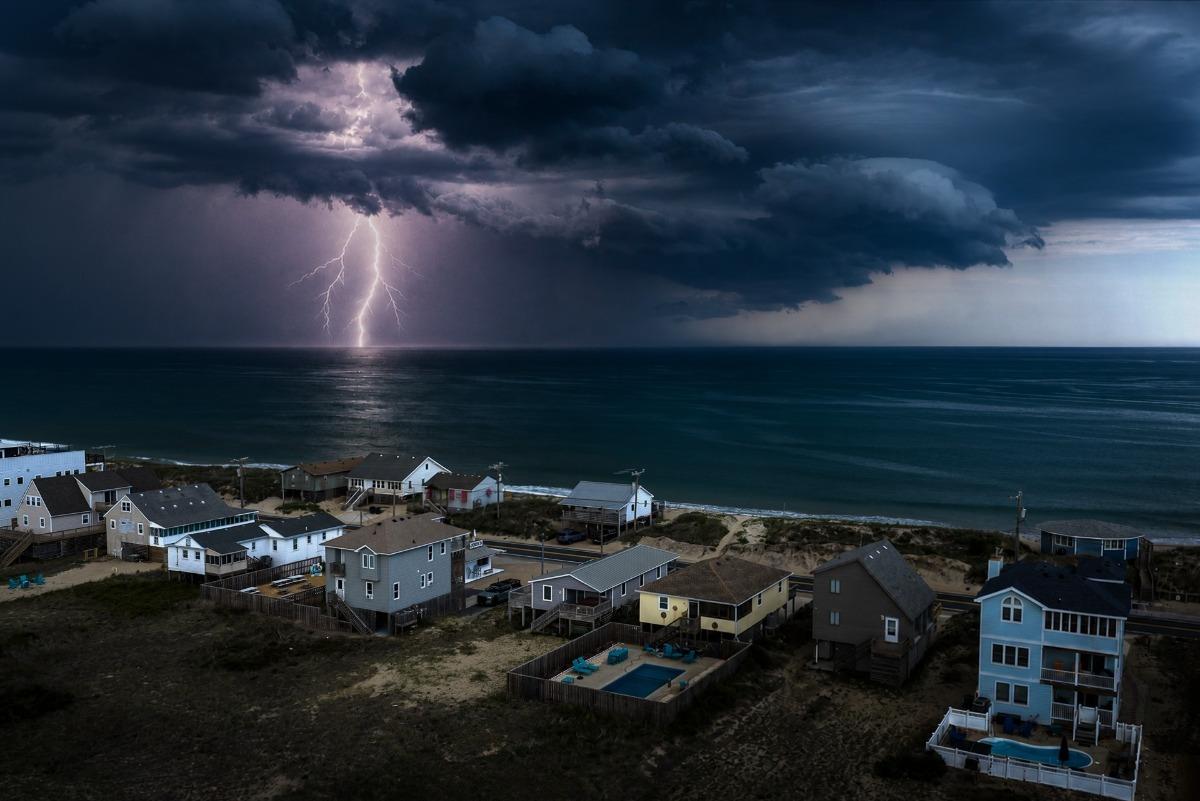
If you’ve ever stayed on the Outer Banks before, you’ve heard of Hurricane Season. The peak hurricane season runs from mid-August to late October, when the warm summer ocean water (which cools far less rapidly than the air) and autumn thunderstorms mix together to create the tropical cyclones and hurricanes that are common along the North Carolina coast.
Hurricanes can cause heavy winds, flooding, storm surges, and thunderstorms along the islands, even when the hurricane itself never makes landfall.
That all sounds scary, but the important thing to remember is that the residents of the Outer Banks (the Blue staff included) and Dare County are experienced and knowledgeable, and know what to do when Hurricane Season hits. And hopefully, once you’ve read this article, you will be too!
The most important thing to do when a hurricane watch or warning is declared is not to panic.
A watch is when weather could develop into something bigger but hasn’t yet appeared. A warning is when it’s been confirmed that the indicated weather event is in the area. It’s important to remember as well that the category of a hurricane cannot be used to determine the severity of the storm, which only judges wind speed and does not account for storm surge and flooding.
Storm surge is when, due to wind blowing in from the ocean and sound, the water begins to flow inland, causing flooding. Because the Outer Banks is mostly sand, any water that washes up isn’t absorbed into the ground. This important to remember, particularly if you are staying in an oceanfront or soundfront rental.
When a watch alert goes out is the time to prepare for the incoming weather. Make sure your car has a full tank of gas. Other guests to the Outer Banks will be looking to do the same, and the later you delay on preparing, the more frustrating and stressful the trip to the grocery store or gas station will be.
The important thing to remember is that a watch does not mean that severe weather imminent. It’s an advance notice that there may be bad weather and the time to prepare for it. Acting with caution and care is advised, but there is no reason to let it stop you from enjoying your vacation. If you’re going down to the beach, watch the flags and listen to the lifeguards, and no matter where you are, keep an eye on your phone. Outer Banks Blue will be sending updates about incoming weather if (and only if) it will affect your stay.
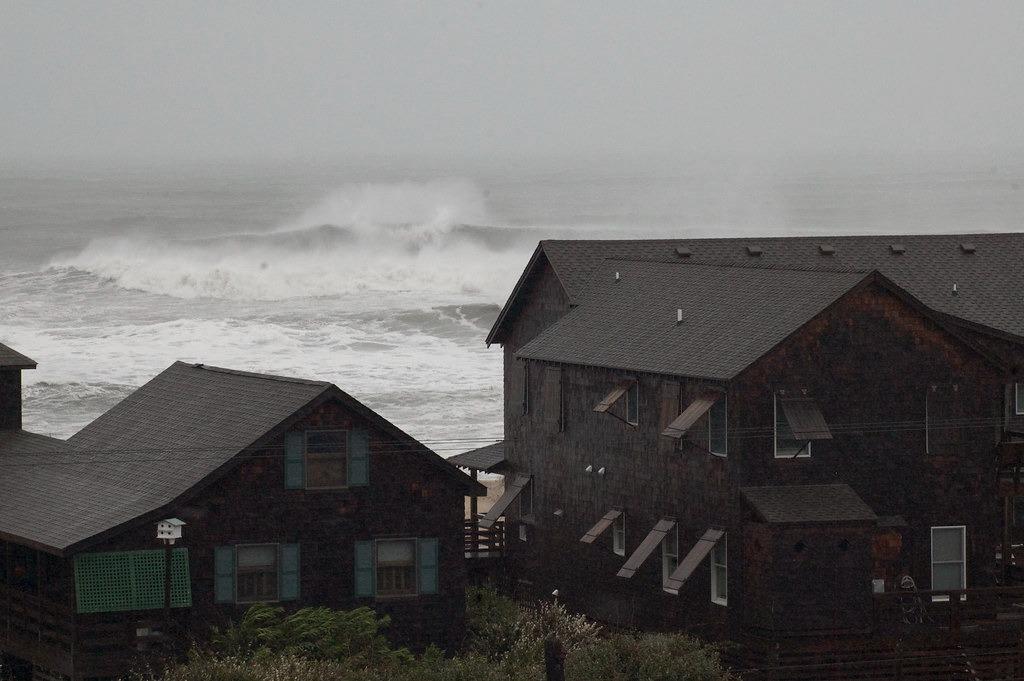
Like everywhere else, the Outer Banks can be subject to life-threatening weather conditions from time to time, and when that happens, Dare County may issue an evacuation order. This is ONLY called for when the lives and safety of residents and guests could be at risk, and as such you should prepare to leave promptly if an evacuation order is issued. Evacuation orders are NOT a recommendation and must be followed as directed.
There are only two ways off the Outer Banks: Highway 64 West and Highway 158 North. This means that there will be major traffic delays (you’ll probably be familiar with these if you’ve ever driven down to the Outer Banks on a Saturday!), so make sure to give yourself plenty of time to get to safety. Dare County recommends using 64 West if at all possible. Avoid driving through deep water, and follow the directions offered by local authorities - they’re here to make sure you get to where you’re going.
Make any preparations regarding weather events early to cut down on the amount of time you’ll spend in traffic as you move off the island. Packing the car beforehand can cut down on time and stress should you have to leave the Outer Banks for your own safety.
Signing up for OBXAlerts will keep you informed with severe weather watches, warnings, and mandatory evacuation notices when/if they occur.
Outer Banks Blue will text all guests regarding impending evacuations, and you can always visit our homepage for further information.
Outer Banks Blue does not provide refunds for weather events and other acts of God. This is why it’s so important to purchase travel insurance, which will reimburse you not only for weather events but also for cancellations for illness, injury, or death.
Outer Banks Blue partners with Red Sky Travel Insurance to cover disruptions to your vacation, with up to $100,000 reimbursement on your vacation rental reservations, $200 per day ($750 maximum) for expenses related to trip delay such as hotel accommodations, emergency medical coverage, and roadside assistance services. Travel insurance can be added up to 30 days prior to arrival with your final payment. Ask our reservationists to help add travel insurance to your reservation today!
While hurricanes, tropical storms, and other weather events can be frightening, it’s important to remember that the probability of evacuation or similar danger is very low. Even in a worst-case scenario, there's no need for alarm - national and local weather authorities will deliver notifications well in advance, and our team will be standing by should an evacuation be declared.
Since 2020, there have never been more than two evacuation orders for Dare County due to weather, and they have always been for Hatteras Island or Ocracoke Island and not for the Northern Beaches, which is where Outer Banks Blue's vacation rentals are located.